




Put simply, mitigation is the work of holding damage to its current size. It is not the repair. Mitigation covers the steps taken ahead of repairs so undamaged materials stay that way. For Palm Bay homes, that means we stop the source, pull the water out, seal off wet areas and get the structure stable. Done well, it shrinks the repair that follows and sometimes removes the need for one.
People often use mitigation and restoration to mean the same thing. Each is its own phase of the job. The emergency stage is mitigation, where we stop the loss, keep it from spreading and stabilize the house. Once the structure tests dry, restoration takes over and covers repairing or rebuilding finishes, drywall and floors that were damaged. Insurers treat them as separate line items too, so it helps to know which phase you are in.
A typical mitigation visit covers four things. One: control the source and cut off any new water. Second is extraction, to clear out standing water. Containment, using plastic barriers and controlled airflow so moisture and contaminants stay out of clean rooms. Fourth is stabilization: unsalvageable materials come out, surfaces receive antimicrobial treatment, and dehumidifiers and air movers are placed. We also protect furniture and belongings by moving or blocking them up.
Water Damage Mitigation, Step by Step
We follow a proven process to ensure every job is completed to the highest standards. Here's what you can expect when you choose Palm Bay Restoration:
Control the Source
The supply gets shut off, the broken line capped, or the opening letting water in tarped and boarded. If a plumber or roofer is needed for the permanent fix, we coordinate the timing.
Remove Standing Water
We extract standing water using pumps and extraction units, then check carpet and its padding. Drying machines on their own cannot limit damage the way prompt bulk extraction does.
Set Up Containment
Plastic barriers and controlled airflow separate wet rooms from dry ones. That way dust, humidity and contaminants do not move through the home during the work.
Stabilize the Structure
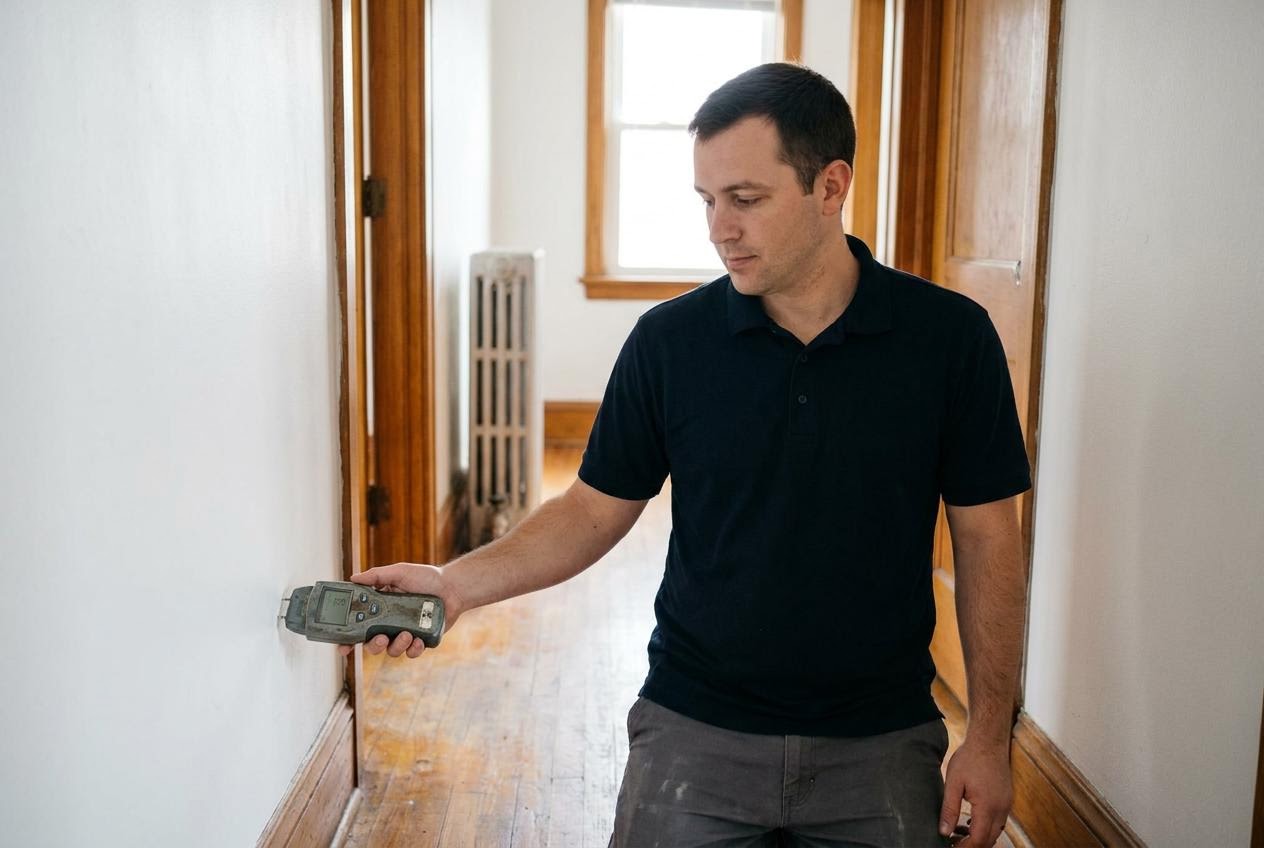
Unsalvageable materials are removed, surfaces get antimicrobial treatment, and air movers and dehumidifiers are set. Moisture readings are recorded on every visit until the structure can be repaired, typically in 3 to 5 days.
Water Damage Mitigation Issues? We Can Help.
Call Palm Bay Restoration for fast, reliable service.
Call (816) 477-2304 NowComparing DIY and Professional Water Damage Mitigation
Some simple tasks are suitable for DIY, but most water damage work benefits from professional tools, training, and experience. Consider the following comparison:
| Factor | DIY Approach | Professional Service |
|---|---|---|
| Isolating wet rooms | Shutting doors to the wet room | Plastic containment with managed airflow |
| Extraction | Mop, towels and a wet vac | Bulk water out with pumps, extractors |
| Contaminated water | Bleach on visible surfaces | Category-specific antimicrobial applied |
| Source control | Close a valve, fingers crossed | We prove the source is controlled |
| Material decisions | Hoping wet materials recover | Meter data drives each removal |
Signs You Need Water Damage Mitigation in Palm Bay
Catching these issues early helps you avoid costly problems and protect your property. Here are the most common indicators that it's time to call a professional:
- The space under your cabinets in the bathroom or kitchen took on water you cannot get to.
- Flooring is carrying moisture past the doorway to an adjoining room.
- An adjuster or agent said you must reasonably limit additional damage.
- Wet materials have sat for a day and a musty smell is starting.
- An opening in the roof or at a window lets rainwater enter the building.
- Underfoot the carpet is spongy because the padding below holds water.
- Water is no longer flowing, though it has left wet floors, cabinets or walls behind.
Don't Wait Until It's an Emergency
Many water damage problems start small but can escalate quickly into costly emergencies. Call Palm Bay Restoration at (816) 477-2304 at the first sign of trouble.
What a Professional Brings to Water Damage Mitigation
Fast decisions, one after another, are what mitigation consists of. Which drywall can be dried in place and which has to be cut out? Is the water Category 1, 2 or 3, and has it changed since the leak began? Does the cabinet toe kick need to come off? Our team makes these calls from training and from moisture readings, not from how a surface looks or feels to the hand.
There is a claim-related reason to do mitigation right as well. Under most policies you must act reasonably to keep the damage from growing, with proof that you did. We photograph conditions on arrival, record moisture readings daily and keep a list of anything removed. Together those records show the water's effect and our response to it. It also gives the repair contractor a clear starting point, with no wet surprises behind new drywall.
Want a Professional Opinion?
Our experienced technicians can assess your situation and recommend the best solution.
Call (816) 477-2304 TodayWater Damage Mitigation Prevention Tips
Taking preventive measures can help you avoid costly water damage issues down the road. Follow these tips from our IICRC-certified technicians:
- Leave the heat on during winter trips so the plumbing cannot freeze.
- Ground next to the foundation should fall away from it, which keeps water from collecting there.
- Replace rubber washing machine hoses with braided steel lines every five years or so.
- Once a month, look beneath sinks and near toilets for stains, drips or soft spots in the floor.
- Roof penetrations, door frames and window edges should be sealed ahead of the next big storm.
- Have your water heater inspected yearly and replace it before the tank fails.
Water Damage Mitigation FAQ
Get Water Damage Mitigation Help Today
The sooner you call, the sooner we can help. Reach Palm Bay Restoration for same-day service.
Get Help: (816) 477-2304